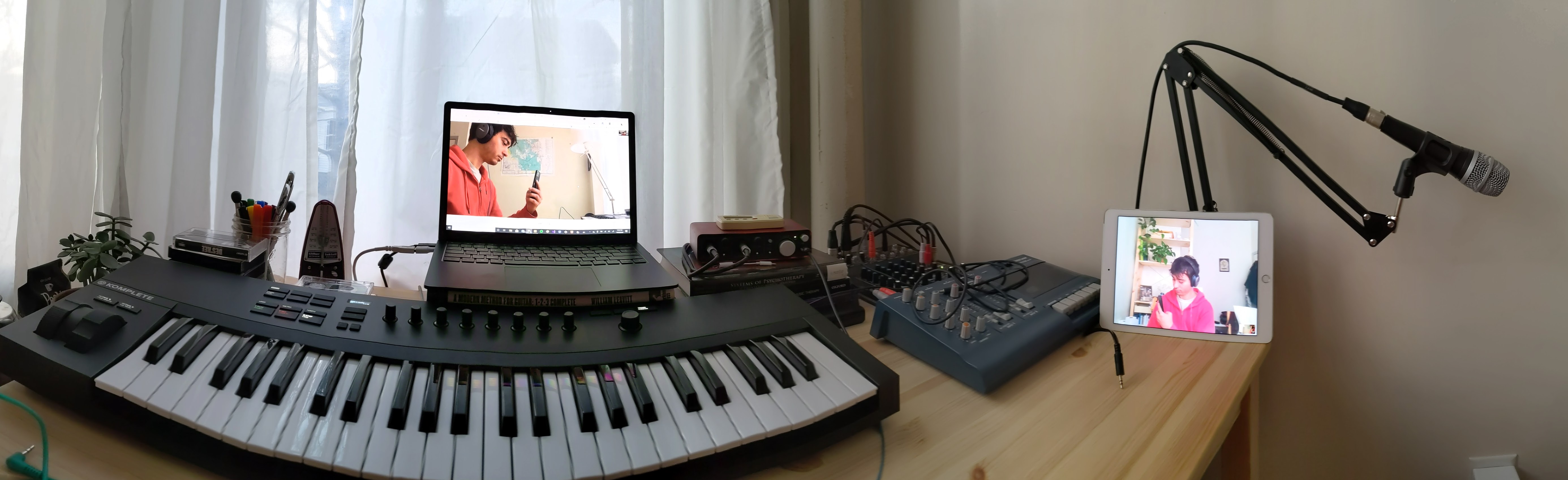
Music therapy is the clinical and evidence-based use of music interventions to support mental, emotional, physical, and social wellbeing. Sessions are tailored by trained professionals using activities such as listening, songwriting, improvisation, and instrument playing to meet the unique needs of each client or group.
A brief history: music as medicine
Long before music therapy became a profession with credentials and clinical protocols, music had already found its way into healing spaces. In ancient Greece, philosophers debated its influence with surprising seriousness. Plato worried that certain musical modes could unsettle moral order, while Aristotle described music as a means of regulating emotion and restoring balance¹. Across cultures, music appeared in temples, rituals, and early medical traditions as a purposeful intervention rather than a decorative art².
Medicine’s sustained interest in music emerged during periods of crisis. World War I and World War II filled hospitals with injured soldiers coping with physical trauma, psychological shock, and long recoveries. Volunteer musicians were invited into veterans’ hospitals to offer relief that medicine alone could not provide³. Accounts from the time describe noticeable changes: patients became more attentive, less withdrawn, and more communicative. Singing, listening, and playing music seemed to soften the isolation of hospital life and support emotional processing during rehabilitation⁴.
These wartime observations prompted hospitals to formalize the use of music in clinical settings. By the 1940s, trained musicians were being employed to work alongside medical teams, particularly in psychiatric units and rehabilitation centers. Early music therapists developed methods through direct engagement with patients, refining their approaches through trial, observation, and collaboration. The field grew from these practical roots, shaped by human need rather than abstract theory⁵.
The scientific foundation of music therapy expanded dramatically in the late twentieth century with advances in neuroscience. Neuroimaging technologies such as fMRI, PET, and EEG made it possible to observe how music affects the brain in real time. Research demonstrated that musical engagement activates distributed neural networks involved in auditory processing, motor planning, emotion, reward, memory, and social interaction⁶. This broad activation pattern helped explain why music could support recovery and learning in ways that single-target interventions often could not.
Studies of neuroplasticity further clarified music’s therapeutic potential. Researchers documented structural and functional brain changes associated with repeated musical activity, including improvements in speech following melodic intonation therapy and gains in motor coordination through rhythm-based interventions. These findings were especially influential in stroke rehabilitation and acquired brain injury research, where music-based approaches supported experience-driven reorganization of neural pathways⁷.
Today, music therapy reflects this layered history. It draws from early philosophical inquiry, wartime clinical observation, and contemporary neuroscience. In practice, these influences converge in sessions that prioritize responsiveness, creativity, and relational engagement. Music becomes a medium through which people explore emotion, rebuild skills, and reconnect with themselves and others, informed by evidence and guided by lived experience.
References
- Aristotle. Politics, Book VIII; Aristotle. Poetics.
- Horden, P. (Ed.). Music as Medicine: The History of Music Therapy since Antiquity. Ashgate, 2000.
- Bunt, L., & Stige, B. Music Therapy: An Art Beyond Words. Routledge, 2014.
- Spiro, N., Perkins, R., Kaye, S., & Tymoszuk, U. (2014). Music and Military Rehabilitation. British Journal of Music Therapy.
- Bruscia, K. Defining Music Therapy. Barcelona Publishers, 1998.
- Zatorre, R. J., Chen, J. L., & Penhune, V. B. (2007). When the brain plays music. Nature Reviews Neuroscience.
- Schlaug, G., Norton, A., Marchina, S., Zipse, L., & Wan, C. Y. (2009). From singing to speaking: Why melodic intonation therapy helps. Music Perception; Magee, W. L., et al. (2017). Music therapy for acquired brain injury. Cochrane Database of Systematic Reviews.
How music therapy works
Music engages the brain in ways that facilitate emotional regulation, social connection, motor coordination, and cognitive engagement. In therapy, these processes are intentionally guided to:
- Reduce anxiety, depression, and stress
- Support emotional expression and processing
- Enhance communication and social skills
- Foster connection and community
- Encourage creative exploration and self-expression
My approach
Sessions are highly personalized, integrating conversation, music-making, songwriting, improvisation, and creative prompts. Examples include:
- Life Review Playlists: Using music to reflect on meaningful experiences.
- Chord or Soundscape Check-Ins: Musical reflection of current emotional states.
- Body Awareness Through Sound: Rhythm, instruments, and vocal exercises to connect with the present moment.
- Songwriting & Lyric Analysis: Creative expression to process feelings and experiences.
- Environmental Sound Sampling: Incorporating place-based sounds to foster connection to environment.
- Exploring Uncertainty Through Indeterminate Music: Reflecting on uncertainty through chance operations in music composition and discussion.
Who can benefit?
- Individuals experiencing anxiety, depression, burnout, or trauma
- Neurodivergent individuals, including ADHD and autism
- People recovering from brain injuries or neurological conditions
- Artists and musicians seeking emotional support and creative development
- Anyone seeking connection to self and others through music
No musical experience is required; just openness to explore creatively.
Client Testimonials
"I was looking for online therapists with experience in autism, and having recently picked up electronic music synthesis as self-soothing medium, this approach particularly resonates."
"I recently moved to Berlin, and things didn't seem to work out no matter how hard I tried. Working with a therapist who understands the challenges musicians face has been exactly what I needed to move forward with my life."
"It has been so nice to combine music education with more psychological guidance and have support in pursuing my passion."